
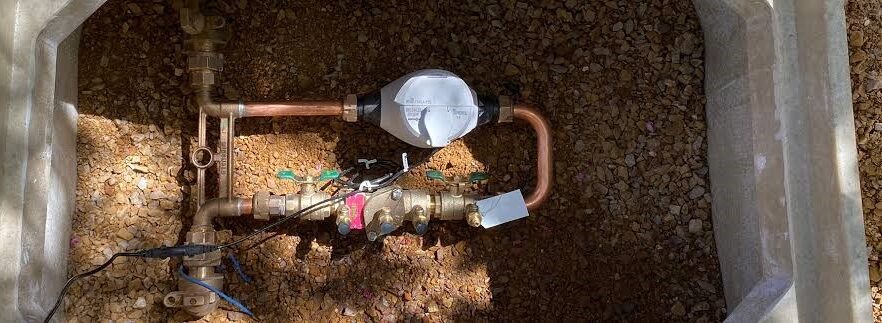
Existing Property Submetering
Pay for the water you use. Not the water everyone else does.
Water and sewer are often one of the biggest bills a property pays. Recap installs, repairs, and maintains water submeters so each unit’s usage is measured and billed to the resident who used it. We work with owners and managers of apartments, HOAs, condos, mobile home parks, and commercial properties.
Building new? See our New Construction Submetering page.
Why properties submeter
Most utilities put one main meter on a property. That number tells you what the whole place used, but not who used it or where the water went.
When water is bundled into rent or HOA dues, or split by a RUBS formula, residents have little reason to care about a dripping toilet or a long shower. When they see their own usage on their own bill, habits change. Leaks get reported sooner, and small savings add up across every unit.
What that means for you:
- Lower consumption. Residents who pay for their own usage tend to use less.
- Fairer billing. Each resident pays for their own usage, not someone else’s.
- Faster leak detection. Automatic meter reading can flag unusual spikes in a unit, a fountain, or a pool before a small leak becomes real damage. Daily usage reports also make resident billing questions easier to settle.
- Better cash flow. More of your water cost is recovered, and less is absorbed into operations.
A quick check on your own property
Here’s a rough way to see whether your property is using more water than it should. Metered residents commonly use about 2,400 to 3,000 gallons per person each month.
- Count residents, not units.
- Multiply by 2,500 gallons.
- Subtract common area water from your actual monthly usage.
- Compare the two numbers.
Example: 200 residents x 2,500 gallons = 500,000 gallons expected. If your property uses 650,000 gallons and 50,000 goes to common areas, residents account for 600,000. The gap is 100,000 gallons a month.
A big gap doesn’t prove anything on its own, but it tells you where to look.
Already have submeters?
Existing systems often have worn-out meters, dead batteries, or readings no one trusts. We start by inspecting what you have, looking at the meters, the connections, and how the data gets collected. We also ask how you want the system managed, whether that’s routine upkeep, closer monitoring, or better reporting.
If something needs fixing, you get a written quote for the repair or upgrade, and we handle the parts and the work. The goal is a system you can trust before a single bill goes out.
No submeters yet?
If you bill by flat rate or RUBS today, moving to submeters is a bigger project, but a manageable one. We look at your water lines, your plumbing layout, the space available, and local and state requirements. We also ask about your budget and priorities, since a system built for basic cost recovery looks different from one built around detailed leak detection or resident reporting.
You get an installation plan and a written quote before any work starts. After installation, we test the system, train your team, and can take over billing so the whole process lives in one place.
How it works
- Site survey. We inspect your property and talk through your goals.
- Plan and quote. You get a written plan with options and pricing.
- Install or repair. Our technicians do the work with as little disruption to residents as possible.
- Bill and support. We run monthly billing and answer resident questions.
Ready to see what water submetering would look like at your property?
Request a Quote today!